How Brain Enhancement Therapy Can Support the Hidden Senses
When most people think about the senses, they think of the classics: sight, sound, taste, touch, and smell. But for many individuals, especially those with neurodevelopmental differences, the full sensory experience includes four additional systems that are just as critical to everyday function:
Proprioception (the body’s sense of where it is in space)
Vestibular (balance and spatial orientation)
Interoception (awareness of internal body signals)
Neuroception (the nervous system’s unconscious detection of safety or threat)
At Brain Enhancement Center, we work with children and adults whose nervous systems process these sensory signals in unique ways. For many of our clients, dysregulation in one or more of these systems contributes to challenges with motor planning, emotional control, communication, and learning. That’s where our approach can help.
Our Therapeutic Focus
Brain Enhancement Therapy is a non-invasive, personalized method designed to support and regulate the brain through a combination of advanced technologies, including:
Neurotherapy & neuromodulation
TDCS (transcranial direct current stimulation)
TVNS (transcutaneous vagus nerve stimulation)
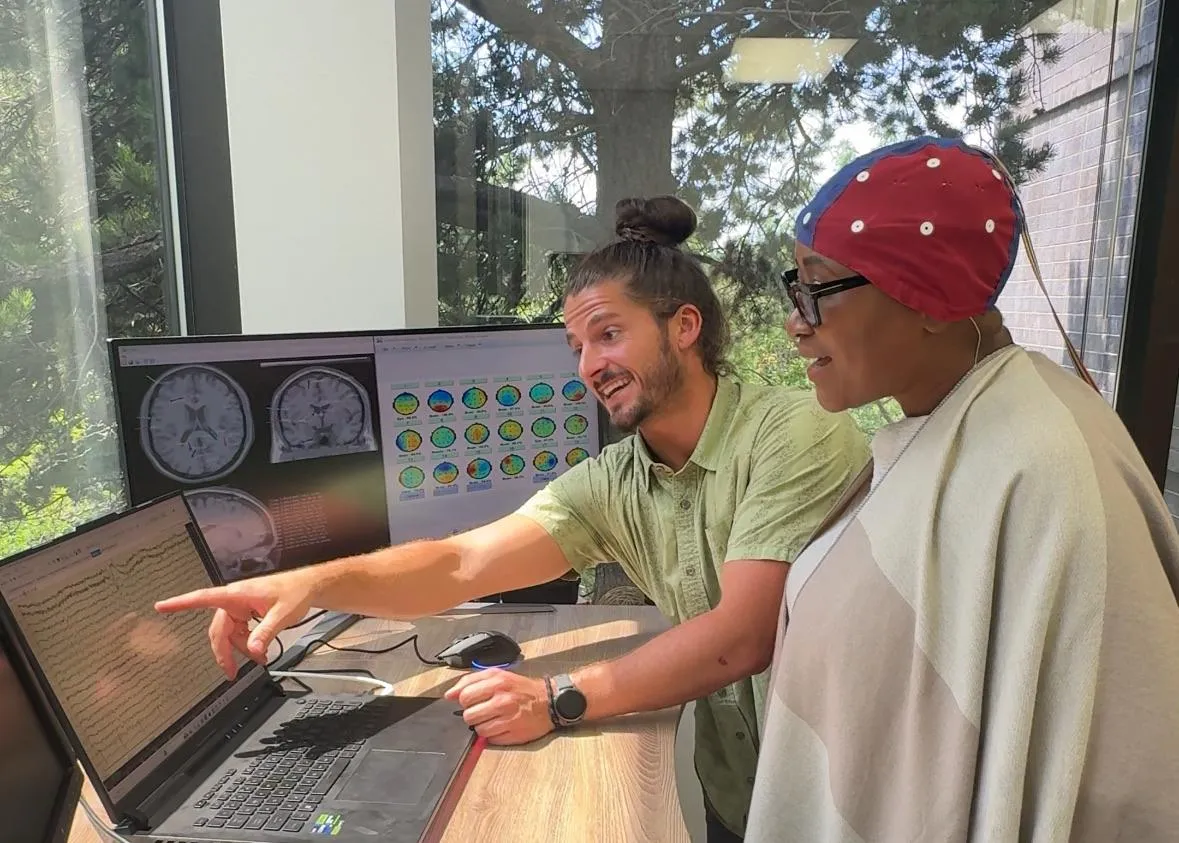
qEEG brain mapping
PEMF (pulsed electromagnetic field therapy)
These tools help improve nervous system regulation, support sensory integration, and reduce internal "noise" so that the brain and body can communicate more clearly.
How We Support Each Sensory System
Proprioception
When the brain struggles to interpret proprioceptive input, motor actions can feel imprecise or disconnected. Clients may bump into things, have difficulty targeting letters on a board, or appear uncoordinated.
Our support:
Regulating neural pathways involved in motor planning and spatial awareness
Improving precision and coordination through targeted neuromodulation
Increasing body awareness and reducing physical tension patterns
Vestibular
Vestibular dysregulation may show up as poor balance, difficulty staying upright, or a need for constant motion to feel centered.
Our support:
Strengthening brain regions related to postural control and motion processing
Enhancing the brain’s tolerance for stillness or organized movement
Supporting cerebellar and midline integration through non-invasive input
Interoception
Clients with interoceptive differences may struggle to identify hunger, thirst, pain, or emotional states. These signals may be muted, overwhelming, or difficult to interpret.
Our support:
Calming the nervous system so internal signals become clearer
Supporting vagus nerve function (TVNS) to improve body-brain communication
Helping clients recognize and respond to their own internal needs
Neuroception
Neuroception is how the body determines whether it’s safe or unsafe—not by thinking, but by sensing. Many individuals live in a chronic fight-or-flight state, which limits access to higher cognitive function.
Our support:
Helping the nervous system shift out of survival mode
Increasing capacity for calm and co-regulation
Supporting emotional safety so that learning and connection become possible
Why This Matters
When these sensory systems are dysregulated, the entire brain-body system has to work harder. Communication becomes more difficult. Regulation feels out of reach. And daily life becomes more stressful—for both the individual and the family.
At Brain Enhancement Center, we don’t treat diagnoses. We support nervous systems. We believe every person deserves a chance to feel safe, steady, and seen in their own body. And when that happens? Communication flows. Connection grows. Possibility opens.
Want to learn more about how we can support your child or loved one?
